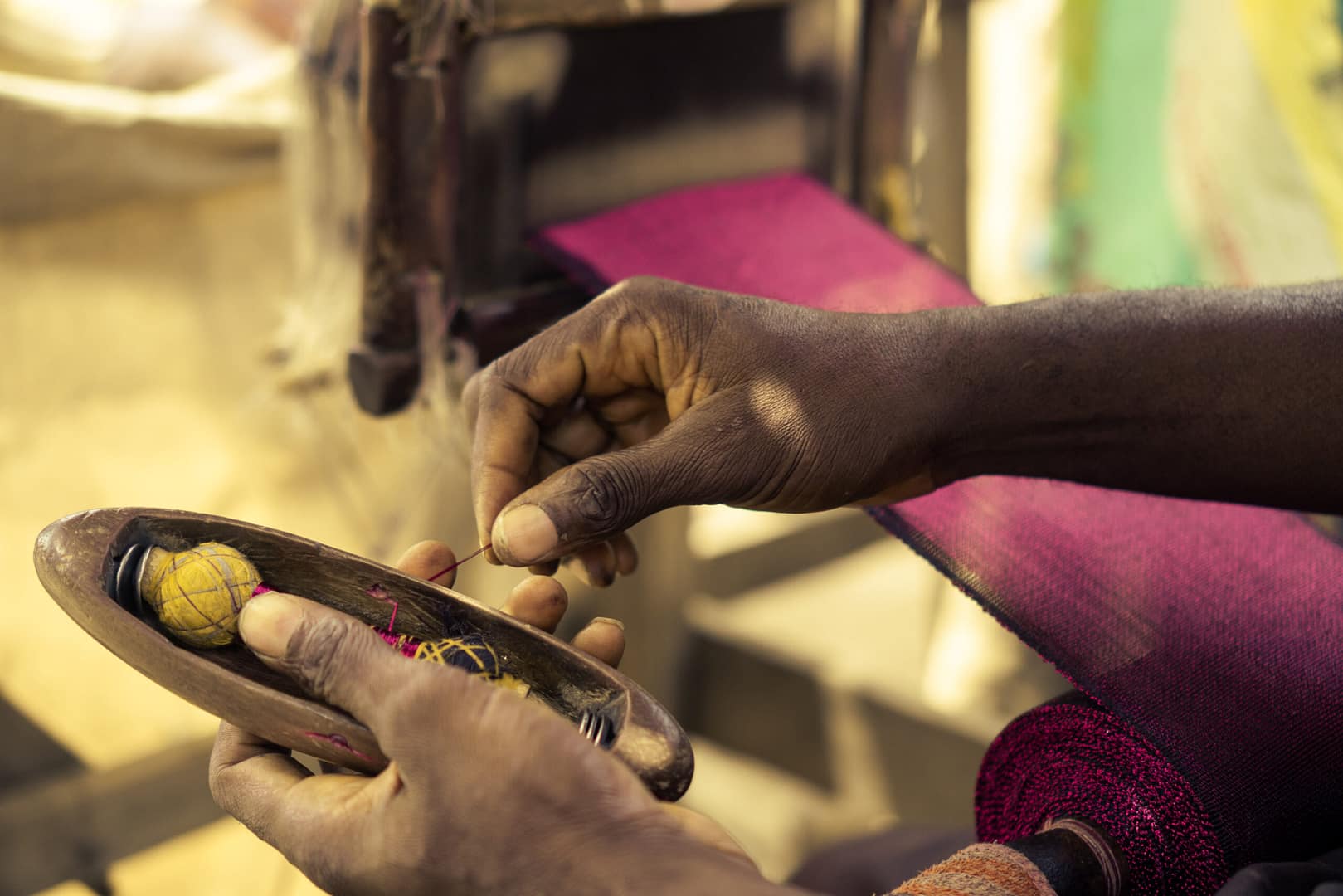
Growing up in Ilorin, a distinct culture I noticed was the connection between family names and the professions they were widely known for. It was easy to hear a name and immediately attribute certain qualities to the bearers of those names. However, the concept behind the origin of these names stretches into the preservation of crafts in Ilorin’s inner cities. Most families with a creative lineage make it mandatory for all offspring to learn and practice their family craft from an early age to build their interest in the craft while fostering its longevity. I’ve always been fascinated by the prioritisation of continuity and legacies these families held dear to their hearts.
Art and craft from immemorial has been an instrument to document stories, experiences, values, beliefs, and everything worthy of expression. We see this as far back as the beginning of life and as told in the holy books. Words were engraved on stones, and gods were crafted from various materials. History is possible because facts have previously been recorded in writing, diagrams, paintings, sculptures and other creative forms. Undoubtedly, one factor that allows knowledge to be passed down from century to century is the art of continuity. Continuity, to me, is the thirst to keep experiences alive. Stories, professions, and cultures have been conveyed for centuries, and their effects remain present with a tendency to extend infinitely into the future as a result of continuity.
Arguably, continuity moulds human identity, and I strongly agree with Melville Fuller on saying, “Without continuity, men would become like flies in summer.” This is why I journeyed to tell the stories of the years of creativity in Ilorin’s inner city through the experiences of four veterans.
This one's for the community.
Create a free Moveee account to read this and everything else in the member archive. Takes 30 seconds — no card needed, free forever.
Free membership · No credit card · Cancel anytime