
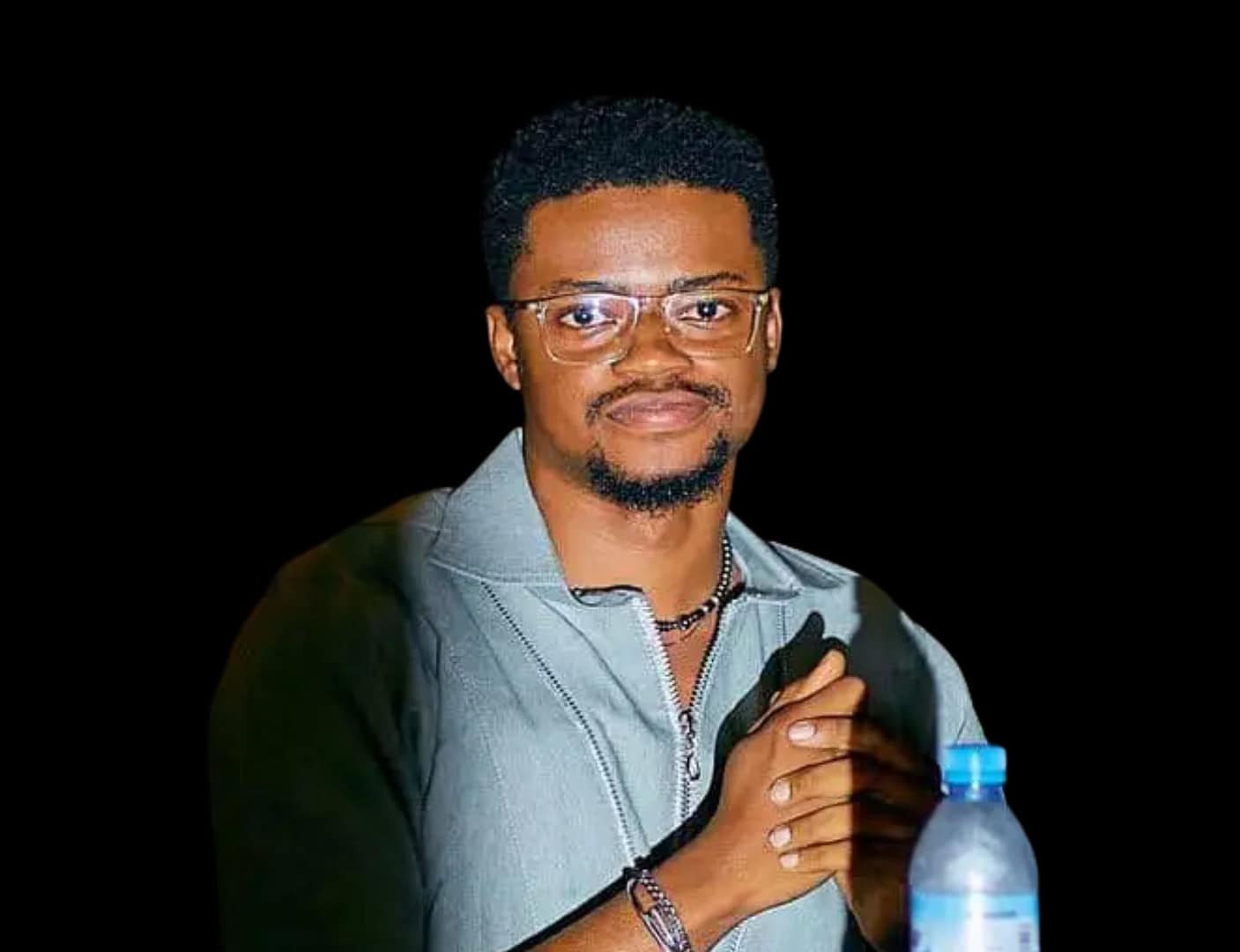
In this episode of The Lane, spoken word artist Elraj talks about his artistic journey and shares personal insights into the creative life. As Elraj…
In this episode of The Lane, spoken word artist Elraj talks about his artistic journey and shares personal insights into the creative life. As Elraj reflects on his new album, Postcards of a Scarred Heart, it’s clear that his experiences with love, chaos, and self-discovery have been a catalyst for his creativity. “Love can be both beautiful and painful,” he says, and his art wrestles with this reality.
ELRAJ: Thank you so much for having me. Well, the creative space has grown tremendously compared to what it used to be. Social media, especially, has given us new platforms, new stages, and new audiences. But if I must be honest, the North still needs more nurturing, more collaboration, especially for those of us whose style doesn’t quite fit into the traditional mould of the core North.
ELRAJ: It’s a bit lengthy, but the first spark was lit while in NYSC camp when I heard a piece by Dike Chukwumerije, “The Wall and the Bridge”. The mastery, the delivery, the wordplay.. I knew I wanted to do something similar
HANEEFAH: What emotion sparked your initial interest in spoken word, and can you share the story behind the first piece you ever wrote, as well as the first one you performed?
ELRAJ: It was a Friday night in Kaduna. I saw an Almajiri boy from Yobe, limping with a wound that refused to heal after an accident. Something in me ached to translate that pain into words. That moment birthed my first piece, “Diary of an Almajiri”. It was less about performance then, more about carrying another person’s story with my voice.
ELRAJ: I’ve always loved postcards, how they carry fragments of someone’s journey in just a small frame of words and images. When the album was complete, the title felt obvious. Each piece was like a postcard from my heart, sent out to the people and the experiences that inspired it.
ELRAJ: It can. Love can be peaceful, soft, and easy. But my own encounters with it haven’t always been that way. The deepest ones I’ve known came wrapped in chaos, in drama. And when they ended, they didn’t just walk away, they tend to leave with parts you have to find ways to fill… I think the album wrestles with that reality.
ELRAJ: Not all personal experiences are worth telling, and some are meant for just you. But if you have incidents that resonate with other people, and you have the knack for it. It’s a disservice not to share
ELRAJ: Remember where my first spark was lit? Yeah, that has stayed with me for a while now. But I’ve been someone who hasn’t caged his preferences tribally when it comes to the quest to find “the one”. And I think that’s influenced the variance that you see in those pieces. In terms of balancing it, I’m of the opinion that language shouldn’t separate us as a nation; we are humans first, hence why there is a blend of the cultural influences I have had in my style.
ELRAJ: There is a particular monotony to how the spoken word is delivered in certain climes, which is not a criticism per se. But for me, I have always consumed a little bit of an unhealthy amount of music across different genres, and I think that’s usually seeping into my creative process. I’ve also seen it done by different artists, most recently by Hussain Manawer. For me, music and words belong together; they hold each other up.
ELRAJ: There is no particular form that it takes. I don’t go searching for inspiration. It just comes really, and it could be at the most random of places, while watching a movie, during a conversation, even on a toilet seat! It just flows for a couple of minutes. The trick is not to lose those precious times, scribble it down, write it somewhere and build on it when the next wave comes.

ELRAJ: Like I said previously, it wasn’t mechanical or time-bound. To put the process into poetic lines would be hard. It would require having an out-of-body experience in order to experience oneself.
ELRAJ: Oh yes, it is. Writing the pieces, taking time to record them in a studio, and finding the right sound and mood is a different form of therapy. I don’t know if my friends in Psychiatry would agree
ELRAJ: That will be when I had the idea for “the Green dot”. Humanising a rechargeable fan was both funny and embarrassing. And this time, the inspiration came around 2 am.
ELRAJ: Details? I’m not sure… My dreams don’t tend to have bounds at times. If I had to put it simply, it would touch as many people as possible. And cap it with winning a Grammy Award for the Spoken Word category.
Free · Weekly · Unsubscribe any time
Nollywood’s AI Problem Is Actually an Audience Problem
Every creative has a story that brought them here. First-person interviews with creatives across industries. Each issue is in partnership with, and guest-curated by a different organization.
Read the full series →
Comments
Sign in to leave a comment.
No comments yet. Be the first to share your thoughts.