
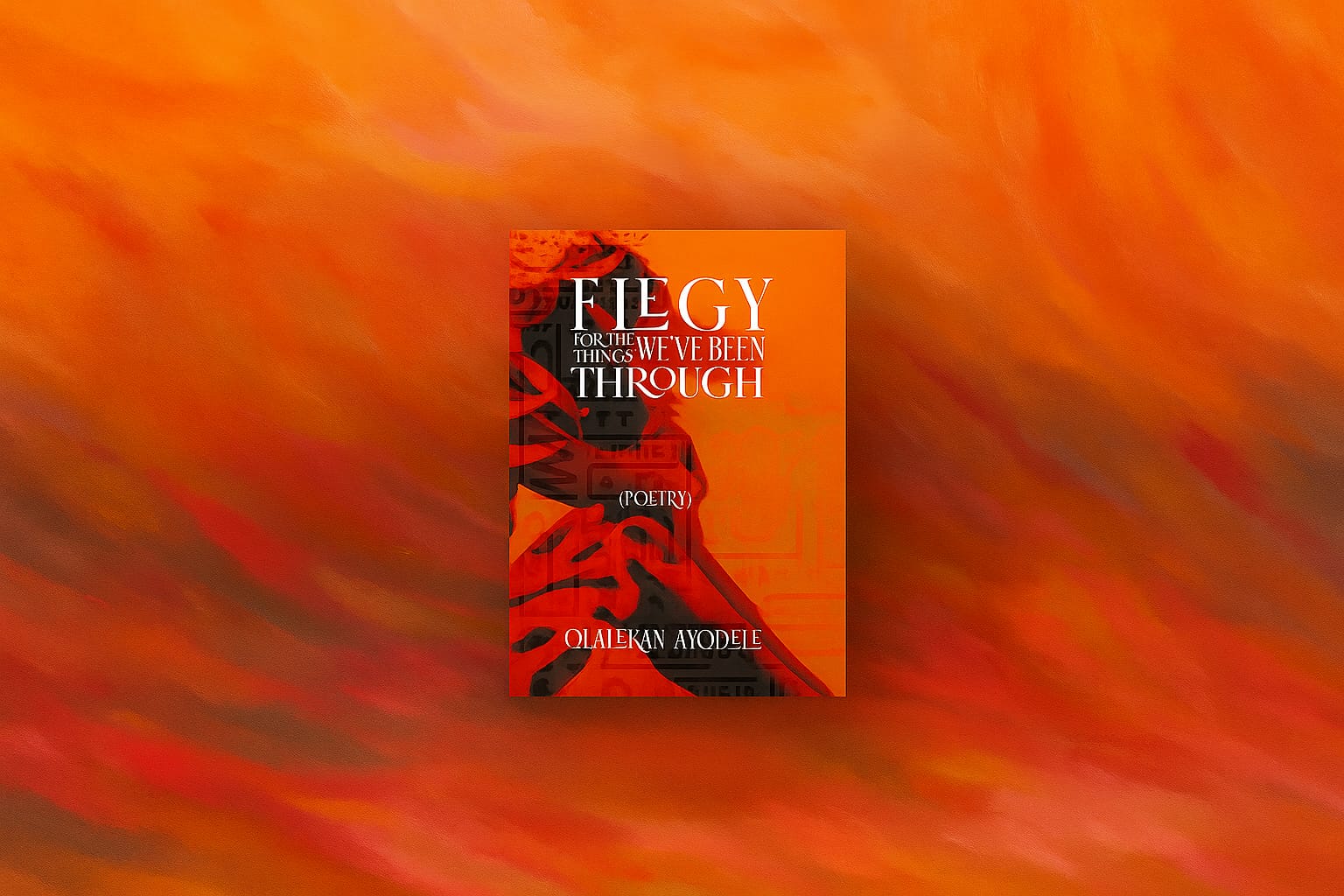
I once posited elaborately on the position of Skip Gates—I believe—regarding critical canons and the particularity of looking at works. He argues that all works…
I once posited elaborately on the position of Skip Gates—I believe—regarding critical canons and the particularity of looking at works. He argues that all works of art carry in their essence the argument for how they should be read. My understanding of this is that any critical gaze one casts upon a particular work should be sufficiently elastic to accommodate its peculiarities. Such subjective bias becomes valid only to the extent that they endeavour to query the peculiarities of a specific work under study. The gaze we adopt on Olalekan Ayodele’s debut collection, Elegy for the Things We’ve Been Through, is the Africanist gaze, through which we infuse some other elements.
Elegy for the Things We’ve Been Through is a work of mourning, resistance, celebration, and memorial keeping, with a lyrical intensity that is both captivating and devastating. In the tradition of African writers who see literature as an act of bearing witness and as social crusading, Ayodele writes with an urgency that reflects the struggles of a people navigating the intricate intersections of loss, survival, and hope.
The titular poem, Elegy for the Things We’ve Been Through, functions as a dirge for a homeland fractured by socio-political instability. The imagery is haunting—ghosts walk alongside the living, wounds remain unhealed, and every election cycle births new casualties. The poet writes, “In a snap, our home changed / The elections / Rounded casualties into / An explosion of irrational numbers.” This stark numerical metaphor recalls the disillusionment captured in Chinua Achebe’s “A Wake for Okigbo”, where history folds into a cycle of loss and the poet becomes a custodian of collective grief. One notes immediately that Ayodele’s elegy, in addition to being an act of mourning, is a confrontation with history, a demand that the suffering endured be acknowledged and remembered. And in speaking of the evocation of past voices and the crises in Nigeria’s history, the poem “Of Delicateness and Kindness” comes to mind, reflecting on post-Civil War blues. Thus, in this poem, as with many others, one can see a strong portrayal of blood and hardship in many forms. The poet persona acknowledges this darkness and reaches for the wind as a form of hope to survive.
The poet’s Lagos, as depicted in “The Urgency of Lagos Life”, is one of relentless motion, an unforgiving metropolis where survival is predicated on adaptation. There is a sense of urgency and a sense of imminent collapse, too, that calls for people to be street smart or be at risk of loss. As the poem notes, this invocation of Lagos as a city that demands resilience echoes Niyi Osundare’s City Without People, where the urban space becomes a metaphor for exhaustion and disenchantment. In Feigned Accidents, Ayodele shifts focus to the moral dilemmas born of economic desperation. The reader is faced with the paradox of necessity breeding societal ill.
Spiritual undertones permeate much of the collection, adding depth to its exploration of existential dilemmas. One spots traces of Soyinka’s symbol of water in “Idanre” as an emblem of destruction and rebirth in “First Rain”, where the persona invokes water as a symbol for renewal, leaning to biblical and indigenous purification rituals. He calls out as the poem taps out, “Beloved, do not leave me, / Because after the first rain / Comes the washing away of sins.” Similarly, in “My God, My God”, the poet wrestles with faith, seeking divine solace in a world where suffering often appears unrelenting. His plea, “Forgive me O Lord, for I have not done enough / Forgive me O Lord, and fill / My heart with contentment,” mirrors Christopher Okigbo’s “Heavensgate”, where the poet yearns for transcendence even as he stands at the precipice of despair. Similarly, “First Rain” invokes water as both a literal and symbolic force of renewal, drawing from both biblical and indigenous purification rituals. “Beloved, do not leave me, / Because after the first rain / Comes the washing away of sins.”
But if the collection mourns, it also celebrates. “Brown Skin Boy” is an affirmation of Blackness, an exhortation to young men to embrace their beauty, strength, and resilience. Reading this poem brings to mind the now-famous award-winning song, ‘Brown Skin Girl’ by Beyoncé. There is also the paradoxical poem, “Waterfall”, which explores the beauty of the persona addressed, steeped in the imagery of fire. Following this in tone is “Duplex for my Daughter”, which steps away from the gloom of the collection to paint a picture of beauty using images of pearls, birds, and warmth.
At any rate, Ayodele employs a stylistic mix of oral traditions, contemporary free verse, and structured poetic forms, creating a multi-textured tapestry that speaks to both the past and the present. The infusion of Yoruba proverbs, indigenous expressions, and the cadences of Nigerian life lends the collection a linguistic authenticity that situates it firmly within an indigenous African poetic canon. One sees a lot of this throughout the collection, but more in a poem like “A Fortune for Distress,” where Yoruba proverbs are interwoven with reflections on resilience: “Ada abo bo e ninu gbogbo ewu aye; / You’re protected from the evil of the world.” There is the experimentation of fusing Nigerian realities with a structured poetic form as seen in “Ghazal for Despair,” where he adopts the classical ghazal’s refrain while infusing it with Nigerian realities: “My mother loves the country and its confusion, / I love the country from afar in my despair.” This interplay between form and content allows Ayodele to bridge the historical and the immediate, reinforcing the continuity of African poetic expression. In all, there is a sense in which Ayodele channels the griot tradition, acting as a historian and a custodian of collective memory.
Ultimately, Elegy for the Things We’ve Been Through is an intriguing work that demands to be read not just with the eyes but with the heart. It is a catalogue of life, celebrations, and suffering transformed into words that will keep echoing long in the hearts of readers.
Free · Weekly · Unsubscribe any time
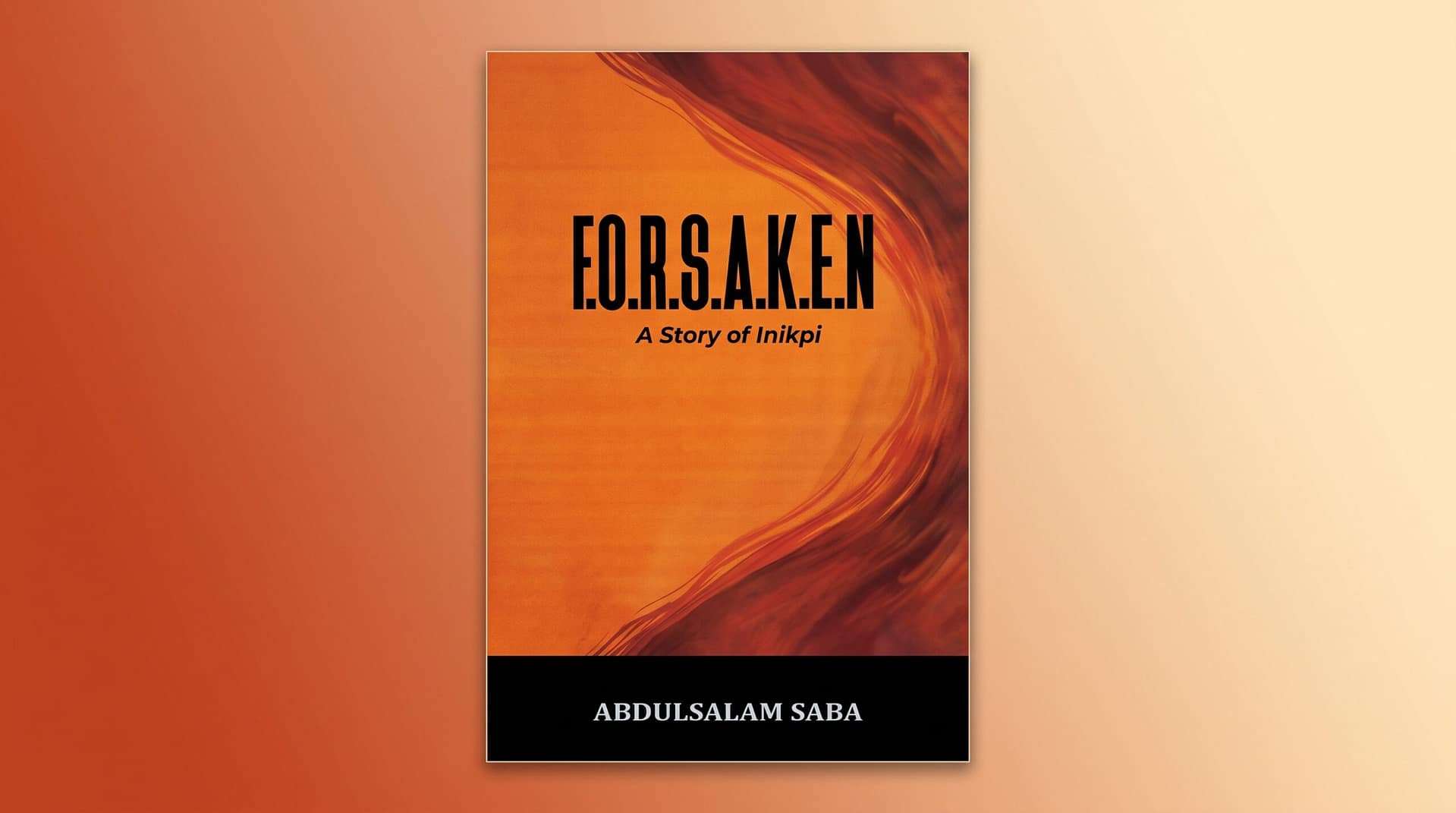
F.O.R.S.A.K.E.N review: Abdulsalam Saba’s Exploration of Silence and Missed Chances

Comments
Sign in to leave a comment.
No comments yet. Be the first to share your thoughts.